
ROTATOR CUFF TEARS
What is the rotator cuff?
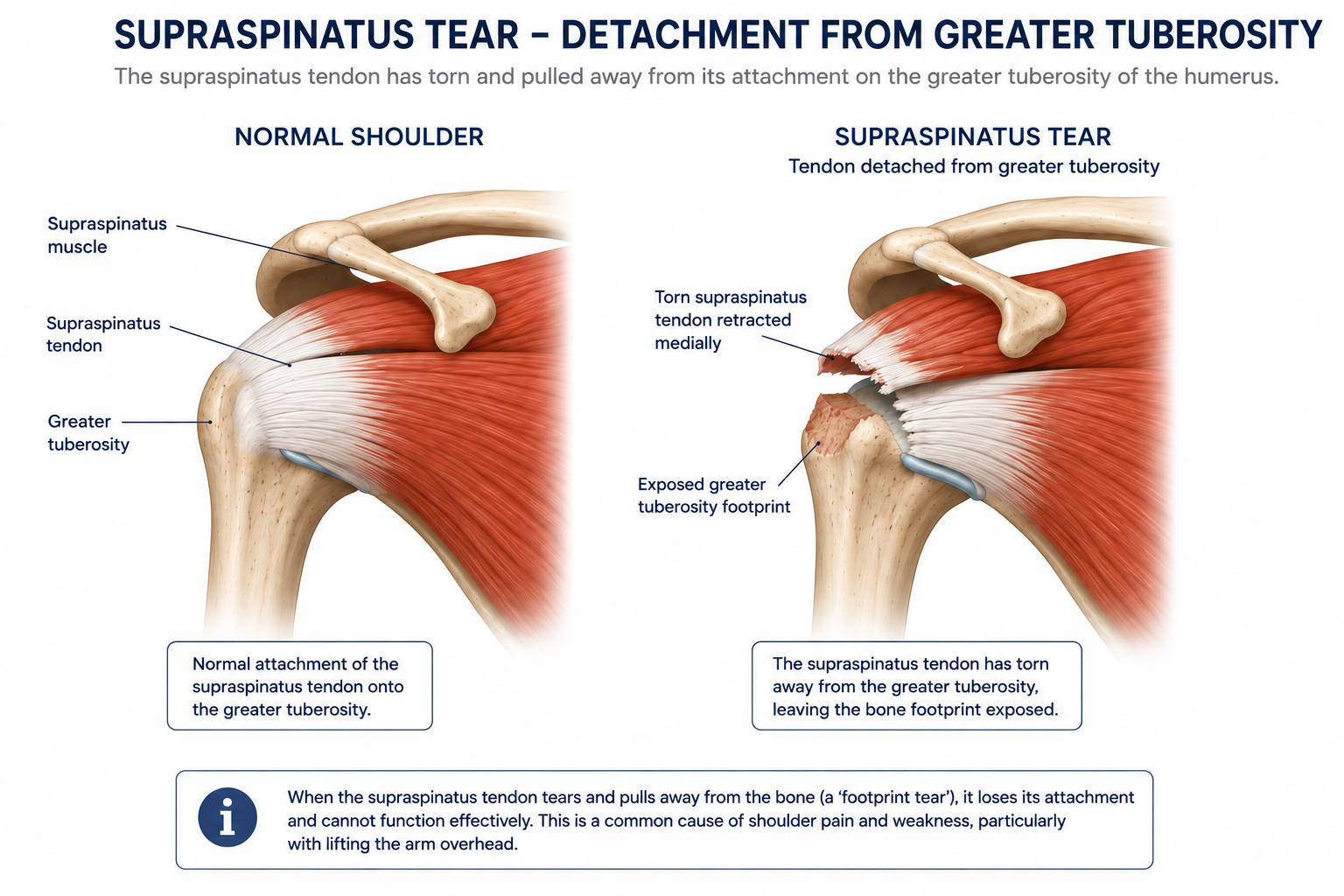
The rotator cuff is a group of four muscles and tendons around the shoulder. These tendons attach the muscles to the upper arm bone and help to lift and rotate the arm. The most commonly torn tendon is the supraspinatus, although the other rotator cuff tendons can also be involved.
A rotator cuff tear occurs when the tendon is partially or completely separated from its attachment to the bone. Tears may develop gradually through wear and tear or may occur suddenly following an injury.
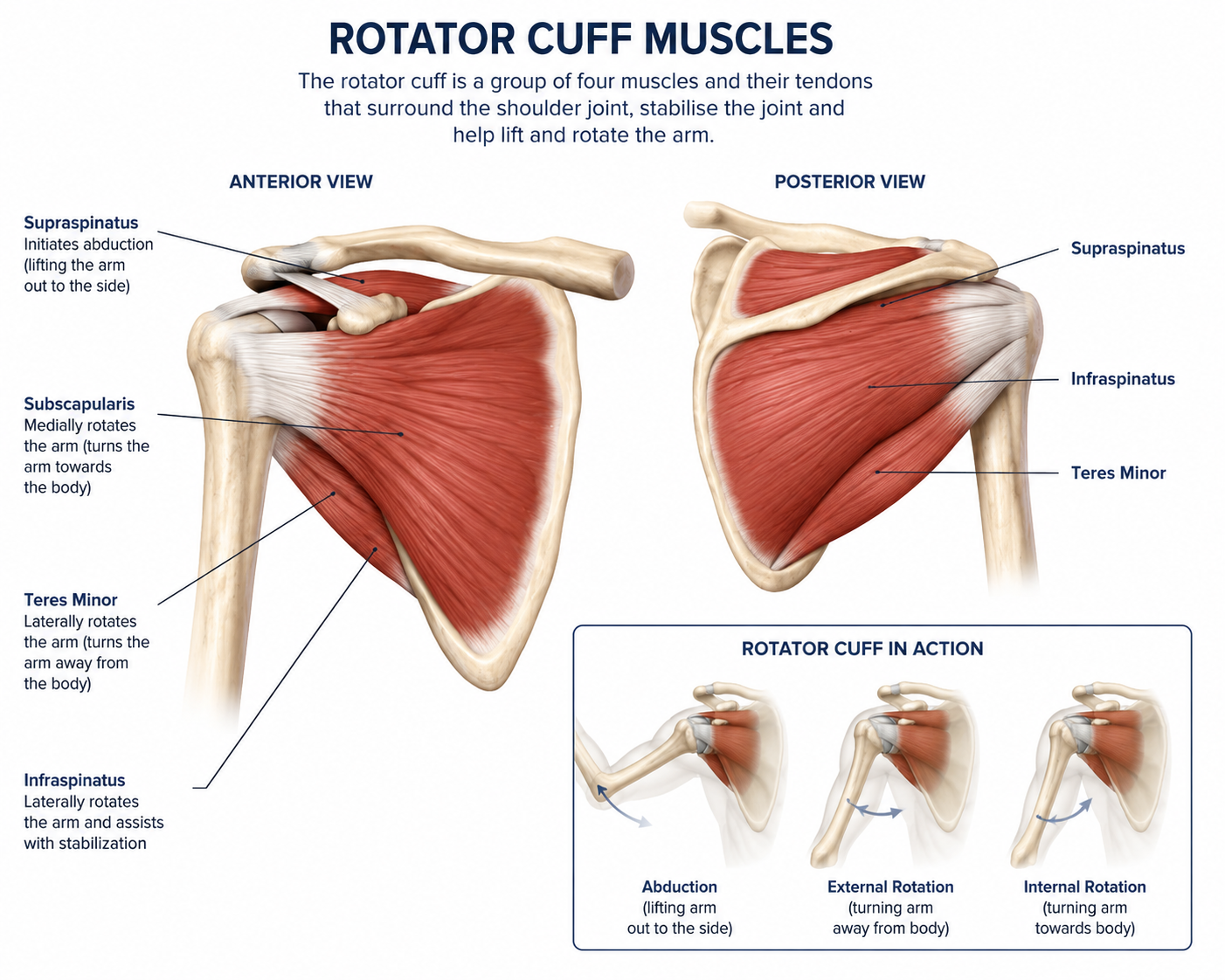
Symptoms vary depending on the size and type of tear. Common symptoms include:
Pain when lifting or lowering the arm
Pain with reaching overhead
Pain when lying on the affected shoulder
Night pain
Weakness when lifting or rotating the arm
Difficulty with activities such as dressing, reaching into cupboards or lifting objects
Reduced shoulder function
Some rotator cuff tears cause very little pain and may be discovered incidentally on an MRI or ultrasound.
A sudden tear may cause immediate pain and weakness, sometimes following a fall, lifting injury or other forceful movement.
Treatment
Treatment depends on several factors, including:
Your age
Activity level
Occupation and sporting requirements
Size and type of tear
Whether the tear occurred suddenly or gradually
Degree of pain and weakness
How long you have had symptoms
The condition of the tendon and rotator cuff muscles
Your expectations and goals
Not every rotator cuff tear requires surgery. Many patients can achieve good pain relief and function without an operation.
Non-surgical treatment
Initial treatment will often include:
Activity modification
You may be advised to temporarily reduce activities that aggravate the shoulder, particularly repetitive overhead activity, heavy lifting and painful movements. This does not usually mean completely resting the shoulder. Maintaining comfortable movement is important.
Physiotherapy
Physiotherapy is an important part of treatment whether or not surgery is eventually required.
A structured rehabilitation programme can help:
Restore shoulder movement
Improve rotator cuff and shoulder-blade muscle strength
Improve shoulder control
Reduce pain
Improve function
Medication
Pain-relieving or anti-inflammatory medication may be useful for some patients. You should discuss the appropriate medication with your doctor, particularly if you have other medical conditions or take other medications.
Corticosteroid injection
A corticosteroid injection may provide temporary relief from inflammation and pain and can help facilitate rehabilitation. Repeated injections may have implications for tendon health and, if surgery is being considered, the timing of an injection can delay surgery.
Surgery
Surgery is generally considered when:
Pain persists despite appropriate non-surgical treatment
There is significant weakness or loss of shoulder function
You have a large or full-thickness tear
You have an acute traumatic tear with significant weakness
You have a high level of activity or an occupation requiring overhead or heavy lifting
Symptoms significantly interfere with work, sport or everyday activities
The decision to operate is individual. The appearance of a tear on an MRI alone does not necessarily mean that surgery is required.
What does rotator cuff surgery involve?
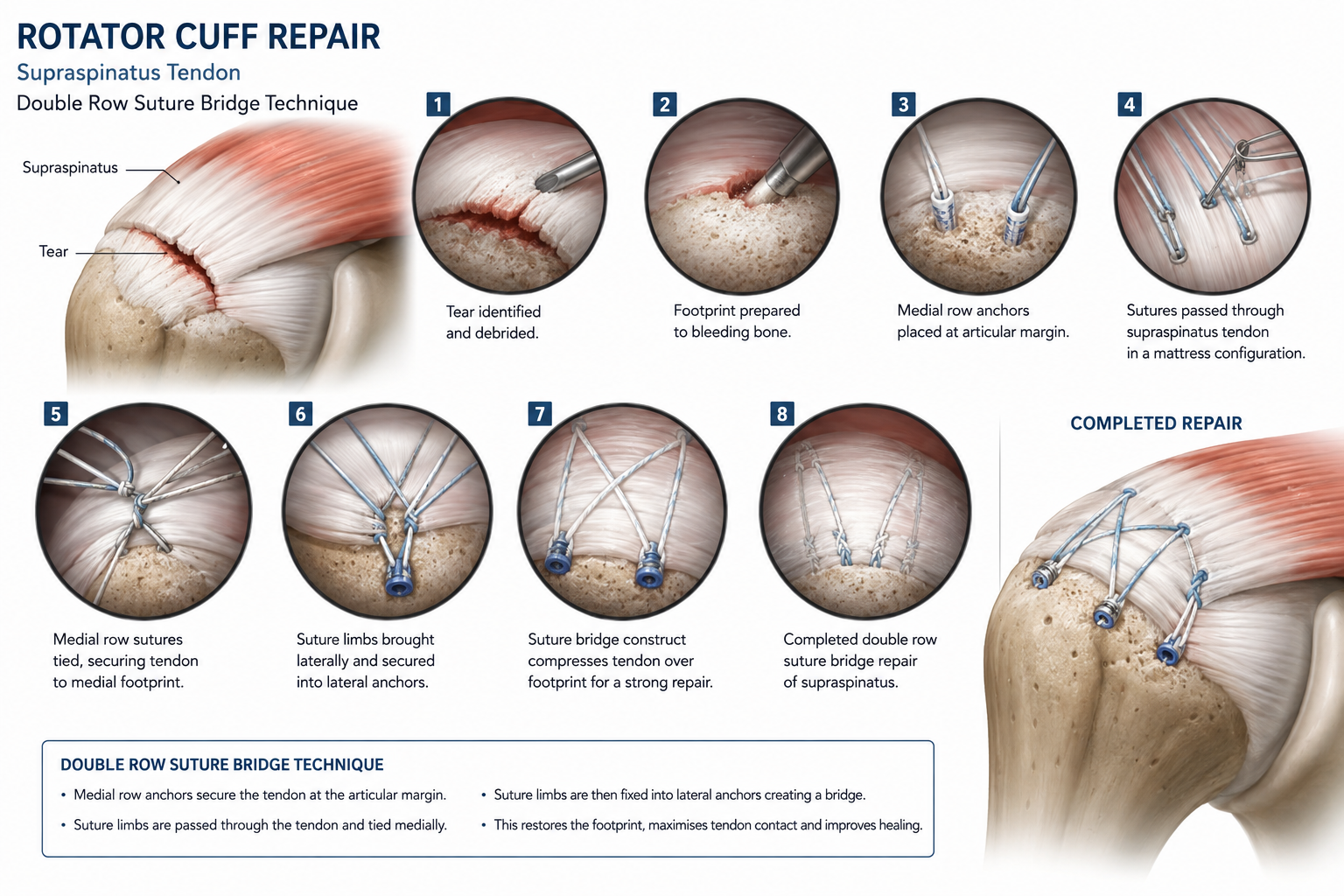
Most rotator cuff repairs are performed using keyhole (arthroscopic) surgery. If the tendon is suitable for repair, it is reattached to the upper arm bone using small anchors and strong sutures. Repairs are performed as day surgery, allowing you to return home the same day.
What should I expect after surgery?
Rotator cuff repair is a slow healing process. The tendon needs time to heal back onto the bone. During the early stages, it is important to protect the repair even if the shoulder starts to feel better. You will usually have a sling for approximately 6 weeks, although this varies depending on the size of the tear, the quality of the tendon and the type of repair performed.
Physiotherapy is an important part of recovery. After 6 weeks in a sling, there is a gradual weaning of the sling and commencing of gentle movement exercises. Strengthening of the shoulder starts at 10-12 weeks after surgery. The shoulder may still feel weak and uncomfortable during this period.
The next three months is gradually increasing the strength of the shoulder with physiotherapy and exercises. There is a gradual return to heavier work and gym work although sports and heavy manual work are not considered until six months after surgery.
The shoulder continues to improve for twelve months after surgery with strengthening.
Factors affecting outcomes after surgery
Factors that decrease the likelihood of a satisfactory result include:
• Large / massive tears.
• Patient age (older than 70 years).
• Poor compliance with restrictions and rehabilitation following surgery.
• Smoking.
• Poor tissue quality.
Returning to work
The timing depends heavily on your occupation.
Desk-based work
Some patients can return to modified desk work within 1–2 weeks, depending on pain, medication requirements and the ability to work comfortably.
Light physical work
A return to modified duties may be possible at approximately 6–12 weeks, depending on the type of work and progress with rehabilitation.
Heavy manual work
Jobs involving heavy lifting, repetitive overhead activity or pushing and pulling may require approximately 4–6 months or longer before unrestricted duties are safe.